
Amputation means surgically removing a body part, like a limb. You might need an amputation if your limb has a serious injury or disease that endangers the rest of your body.
Amputation is the removal of a limb or other body part by trauma, medical illness, or surgery. As a surgical measure, it is used to control pain or a disease process in the affected limb, such as malignancy or gangrene.
Amputation is the loss or removal of a body part such as a finger, toe, hand, foot, arm or leg. It can be a life changing experience affecting your ability to move, work, interact with others and maintain your independence.
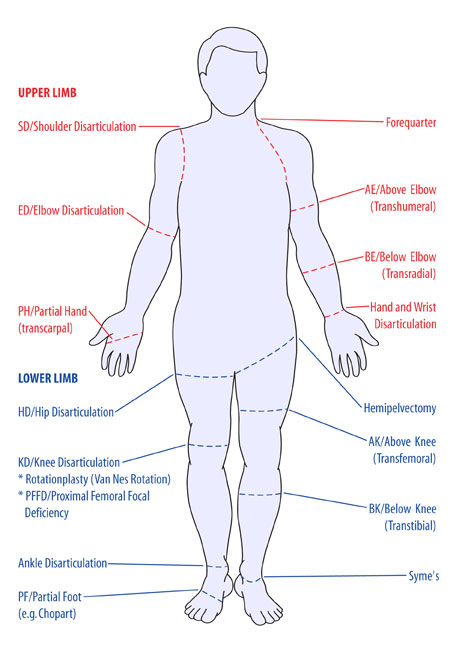
Amputation is the surgical removal of a limb or part of a limb, often performed to treat severe injury, infection, disease (such as diabetes or peripheral artery disease), or certain cancers. It can also be a result of traumatic events.
An amputation is a removal of all or a portion of a limb. A doctor may recommend this surgery approach due to chronic disease or a traumatic injury. Advancements in preventive techniques have...
Amputation is the surgical removal of all or part of a limb or extremity such as an arm, leg, foot, hand, toe, or finger. About 1.8 million Americans are living with amputations.
People can lose all or part of an arm or leg for many reasons. Common ones include: Problems with the flow of blood through your body. These may be the result of atherosclerosis or diabetes. Severe cases may result in amputation (the surgical removal of a limb). Injuries, including from traffic accidents and military combat. Cancer. Birth defects.
Amputation is defined as surgical removal or loss of body part such as arms or limbs in part or full. It is usually distinguished from disarticulation where a part is removed through a joint [1] [2] [3]
Amputation is the surgical removal of a limb or part of a limb from the body. It is usually done as a last resort when other treatments have failed or when there is no other way to save the patient’s life.